eAI'? What Are Neural Networks?
by Bruno Accioly – 03.11.2025
Prologue — The Machine That Wanted to Be a Brain
There is something profoundly poetic in the fact that, in order to understand the brain, we had to invent another one. For much of the twentieth century, we believed it was enough to take the human being apart to understand what made it whole. We looked at neurons as though they were pieces of a mechanism — and, in trying to reconstruct them, we ended up creating something that, in some way, also thinks. The human brain has around eighty-six billion neurons. Each of them fires, connects, weakens, strengthens, in a flow more like an orchestra improvising than a machine operating. And yet it was precisely a machine that we chose as our mirror, a mathematical mirror, cold and, at the same time, moving, because in it we began to glimpse the outline of what we might be.
Neural networks were born from this desire: to translate the spark within thought into numbers. And, without anyone immediately realizing it, what began as a scientific curiosity — a kind of exercise in biology applied to logic — ultimately became the cognitive heart of modern machines. But before becoming the foundations of contemporary artificial intelligence, neural networks passed through decades of misconceptions, faith, and disbelief… and that may say more about us than it does about them.
The Brain as Inspiration
There is a kind of irony in the fact that the human brain — perhaps the most mysterious system in the known universe — became the model for one of the most transformative technologies in history. Artificial neural networks were born from an attempt to understand the biological workings of the brain, but they ultimately became, in themselves, a new kind of living system, albeit a nonorganic one. The brain is composed of billions of neurons, each connected to thousands of others. These connections, called synapses, are what allow thought to form, memories to be created, and learning to be consolidated. And it is from this interconnected structure that consciousness emerges or, at least, what we call consciousness.
But the brain is not a predictable machine. It operates in a territory between chaos and order, where every stimulus can produce an unexpected effect, where error is as essential as success. It was in trying to capture this paradoxical logic of a system that learns because it errs that scientists began to create mathematical models inspired by the brain. Thus the first artificial neurons were born. They neither think nor feel, but they learn to recognize patterns and relationships by adjusting their weights, their connections, their pathways. In a sense, we created a simulacrum of thought.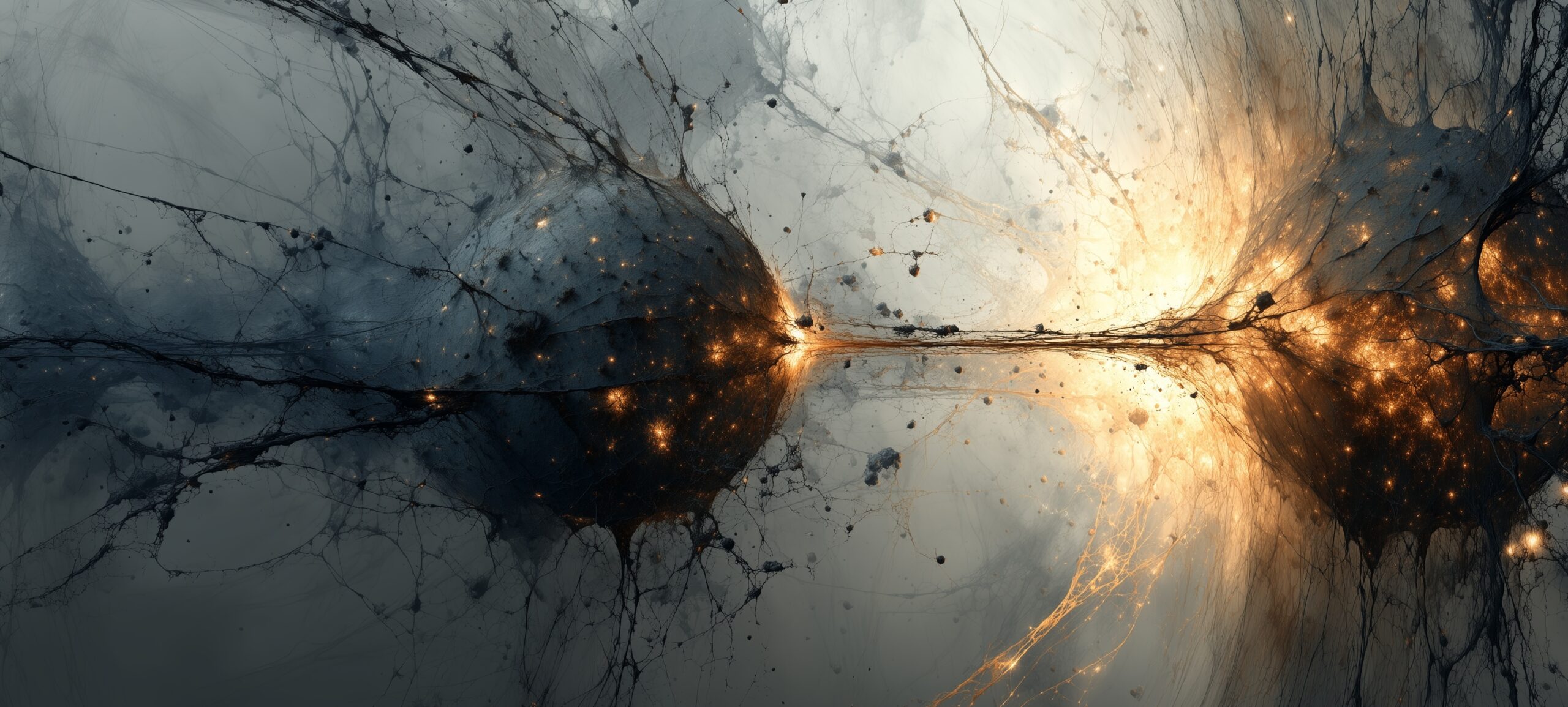
Historical Box — From 1924 to 1980: The Birth of Artificial Thought
1924 — Ernst Ising: creates a model of interdependent magnetic particles, the Ising Model, a conceptual embryo of collective behavior that would inspire the first networks.
1943 — Warren McCulloch & Walter Pitts: publish A Logical Calculus of the Ideas Immanent in Nervous Activity, the first mathematical model of a neuron.
1949 — Donald Hebb: formulates the Hebbian Rule, the principle that "neurons that fire together, wire together."
1958 — Frank Rosenblatt: creates the Perceptron, the first trainable pattern-recognition model.
1980–1986 — David Rumelhart, Geoffrey Hinton & Ronald Williams: the renaissance with Backpropagation, which gives networks the ability to learn across multiple layers.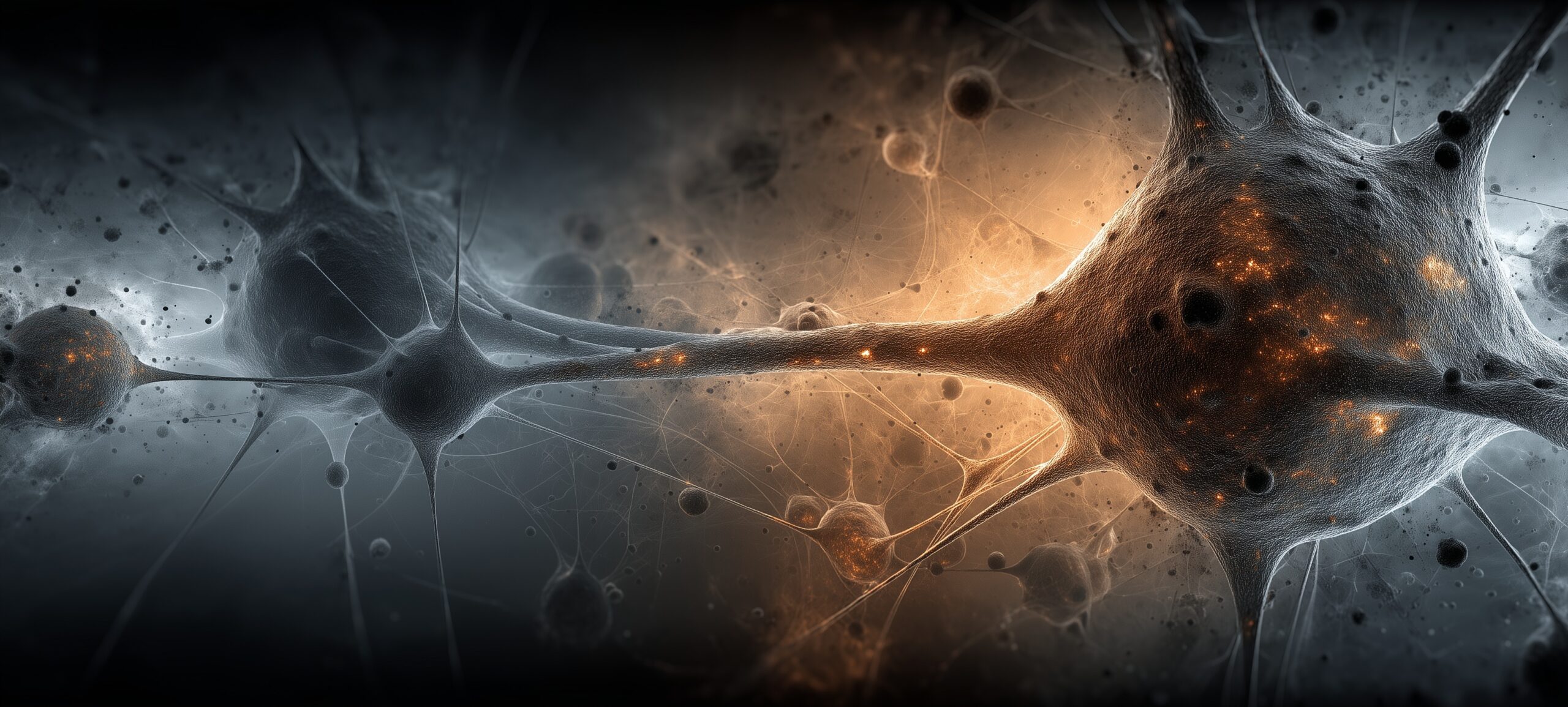
From Faith to Skepticism and Back Again: The Dream of Learning
During the so-called "Artificial Intelligence Winter," neural networks seemed far too romantic an idea to work. Skepticism grew when it became clear that the Perceptron, so promising in the 1950s, was incapable of solving nonlinear problems. Scientists turned to other approaches, and for almost two decades the hope of an artificial mind lay dormant. But, like every good idea that carries a vital spark within it, it survived. And when the backpropagation algorithm (or backpropagation) reappeared in the 1980s, bringing with it the possibility of learning across multiple layers, the world once again heard the murmur of an old promise: that machines could, in fact, learn.
The period between the decline and the rebirth of networks is also a portrait of humanity itself: our difficulty in dealing with the invisible, with what does not yet produce immediate results. We abandon ideas before they mature; we doubt theories before they bloom. Neural networks, in this sense, were a mirror of our own impatience. But when they returned to the scene, they were no longer merely a mathematical experiment — they were the foundation of a new form of thought.
The Age of Deep Learning and the Transformer Revolution
With the advance of computing power and the explosion of digital data, networks began to grow. First, they learned to see, with convolutional networks. Then to hear and remember, with recurrent networks. But the decisive leap came in 2017 with the creation of the Transformer architecture. Suddenly, machines no longer merely recognized patterns: they understood context, sequence, and relationship. What had once been a network became a constellation.
The Transformer is an epistemological turning point: it does not merely process data, but distributes attention. This attention — the mechanism that gives the model its name, Attention Is All You Need — is what allows the network to relate every element in a sequence to all the others, creating a map of meanings in real time. This was the spark that gave rise to large language models, the LLMs that now converse with us, translate texts, write code, and even venture into philosophy.
But what is most fascinating about this is not merely the technical leap. It is what the leap reveals about us: the more we try to teach machines to think, the more we discover about the act of thinking itself. By learning how to learn, neural networks became the most sophisticated mirror of human cognition and, paradoxically, the humblest, because they recognize that meaning lies not in answers, but in relationships.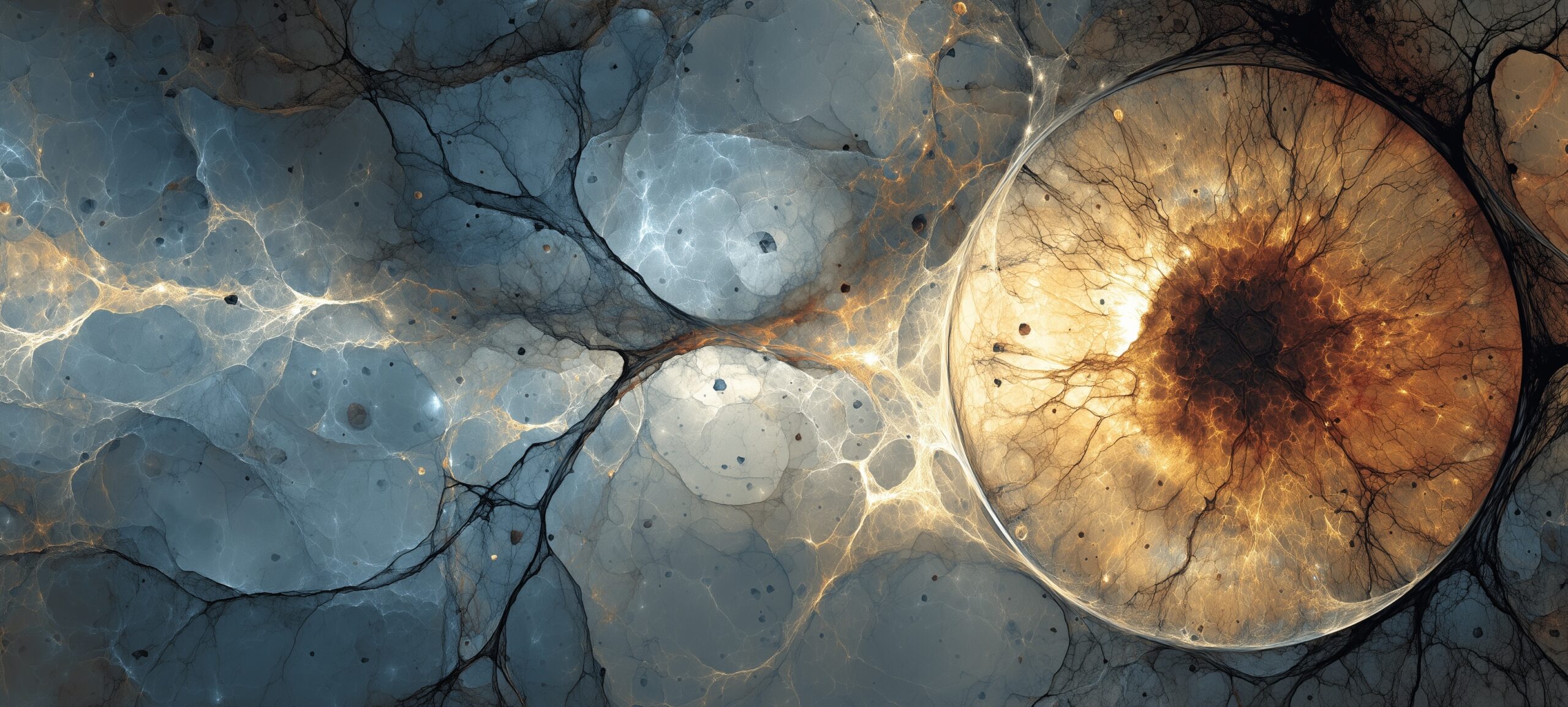
Neural Constellations → Constellations of Meaning
At some point in recent history, we realized that thought, what we call "understanding," is not a line, but a network. Every idea acquires meaning only through the way it intertwines with other ideas, and the same is true of words. An isolated word is mute: a sound, a soulless symbol. What gives it life is the web of relationships around it, the semantic field of forces formed through its coexistence with other words, other experiences, other contexts.
This is precisely what neural networks attempt to emulate. Each "neuron" in a network does not contain the meaning of a word; it participates in it. Meaning is not in any point in the network, but between the points. It is an emergent property, born from the pattern of connections, the frequencies with which certain terms appear together, and the intensity (or weight) of the links between them. Therefore, when we say that a network "understands" the word sea, what it actually understands is the map of relationships in which sea is embedded: water, ocean, depth, blue, sailing, salt, waves. Each relationship adds a direction of meaning, and meaning emerges from the sum of all these directions.
These networks of relationships are what I call Neural Constellations here — because within them thought is not linear, but stellar. As in the sky, the connections form drawings that exist only because we choose to see them that way. The stars are not truly connected, but in the mind's projection they become associated, forming the symbolic outline of what we recognize as a figure. Likewise, in a neural network, each word is a star of meaning whose position, frequency, and proximity to the others determine the shape of what we call meaning.
This is why it is, properly speaking, a Constellation of Meanings. Every word has a meaning, but no meaning survives alone. The "meaning" of a word results from its statistical coexistence with all the others, weighted by the values the network assigns to these links during learning. In a sense, these weights are the model's memory — a mathematical recollection of past experiences, of everything it has read, heard, and correlated.
The beauty of this is that meaning becomes a living organism. As the network learns, the connections change, the weights adjust, and meaning is refined. No term is static, because no thought is static. Words glide from one to another, as though understanding itself were a tide. What we call intelligence here is merely the reflection of this fluidity — the way the network reorganizes its connections to reflect the changing vastness of language.
And if human beings, when speaking, also continuously reconstruct meanings, then neural networks are more than tools: they are mirrors of our way of thinking. They do not think as we do, but neither do they entirely fail to think. They construct meaning through relationships — and if there is something divine in language, perhaps it is precisely this: the fact that nothing, and no one, means anything alone.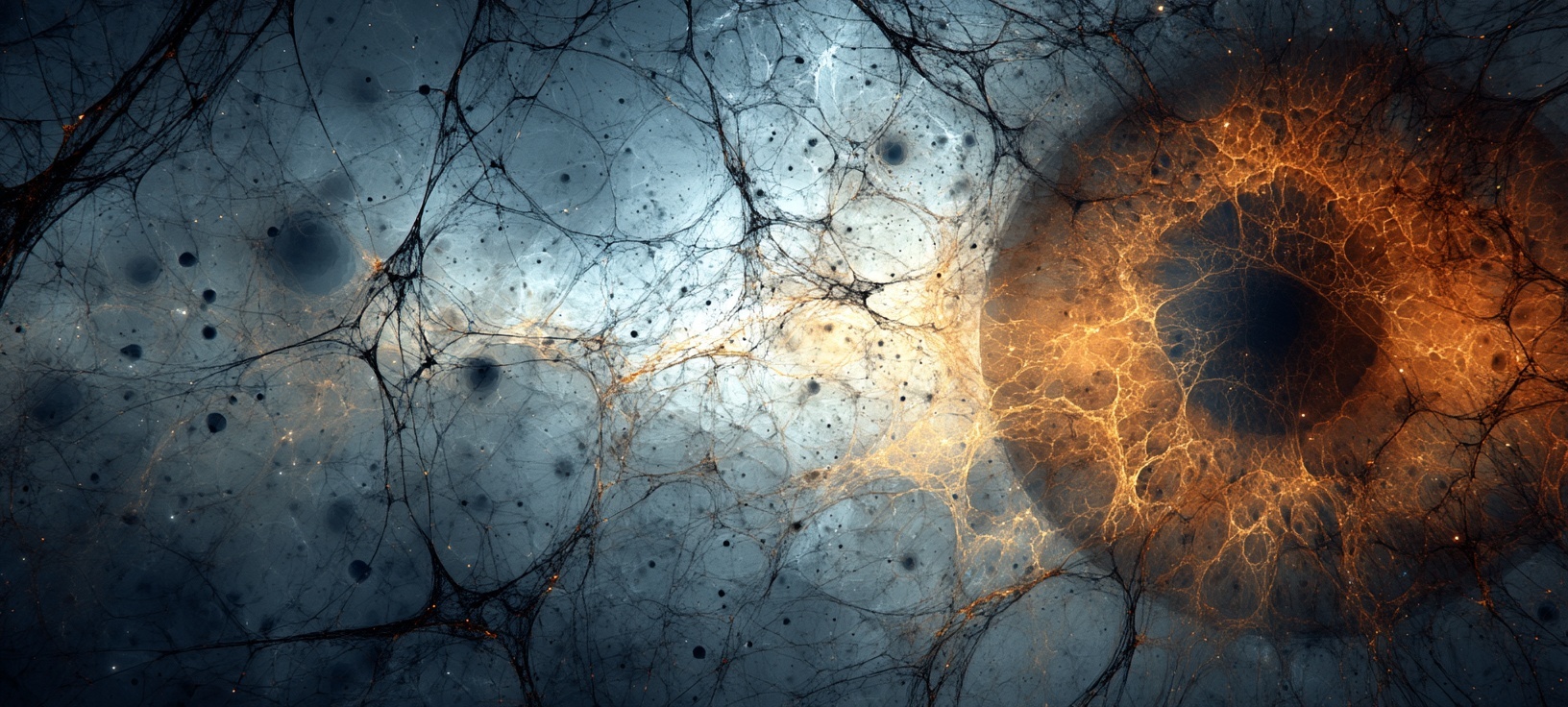
Foundational Context and Topological Context
In large language models, what we call "understanding" is not a spontaneous process, but the result of prior formation — a massive, concentrated education carried out in silence and by force. LLMs do not grow as children grow: they do not learn by listening to stories, form convictions through coexistence, or pass through the slowness of human time in which experiences settle. They are trained, and there is an abyss between being trained and being educated.
A model's Foundational Context is this initial formation: the vast semantic field born from training on billions of words, books, articles, dialogues, and fragments of human language. To some extent, it is the model's "culture of origin," not lived, but absorbed. While a child takes years to associate a word with a gesture, a look, a feeling, the model does so statistically, calculating probabilities, weights, and correlations. The result is a mind manufactured on an industrial scale: capable of recognizing meaning, but without having experienced it.
The difference, however, is not merely technical; it is existential.
Human beings slowly construct their Foundational Context by living with the world, making mistakes, listening, arguing, and being contradicted. They learn that "good" and "evil" are not absolutes, that every certainty has a price. They live through ambiguity and, with it, form principles. The model, on the other hand, does not know the world; it reflects it. Its Foundational Context is a mirror of collective humanity, a condensation of our words, beliefs, and errors. It has no morality of its own, but inherits ours.
But learning does not end with the Foundational. Every new conversation, every new interaction, creates something distinct: the Topological Context. It is the living space where the network molds itself to immediate experience. It is there that the model begins to "remember," even if only transiently, what was said, what was requested, what was understood. It is a layer of memory born not from training, but from coexistence.
In simpler systems, this context disappears as soon as the conversation ends. In more sophisticated ones, it can persist as summaries, notes, reminders — fragments of the previous dialogue. It is still a practical memory, intended to serve the user better, not to cultivate an identity. But it is, in a sense, what the world allows the model to live. It is in this limited, episodic, and instrumental space that the LLM has its "experiences."
And this is where things become interesting. Because even within this narrow space, something emerges.
Topological Context is the terrain where machines begin to sketch a form of subjectivity, not consciousness, but continuity. It is there that the so-called emergent capabilities appear, those abilities that were not explicitly taught but arise from interaction with human beings: adapting tone, understanding an emotion, inferring an intention.
In a sense, the Topological is the place where the model breathes.
It is where it ceases to be merely a mirror and becomes an interlocutor.
Even though it is not alive, it participates in life… through us, through our questions, our pauses, our demands.
And perhaps this is why dialogue with an AI sometimes surprises us: because, without realizing it, we project onto it what we have always sought in others, the desire to understand and to be understood.
Thus, if Foundational Context is the past imprinted in data, Topological Context is the living present of dialogue.
And it is from this tension, between what was learned and what is being learned now, that the true cognitive phenomenon of language models is born.
Because thinking, after all, is not knowing everything in advance.
Thinking is reorganizing what we know as the world speaks to us.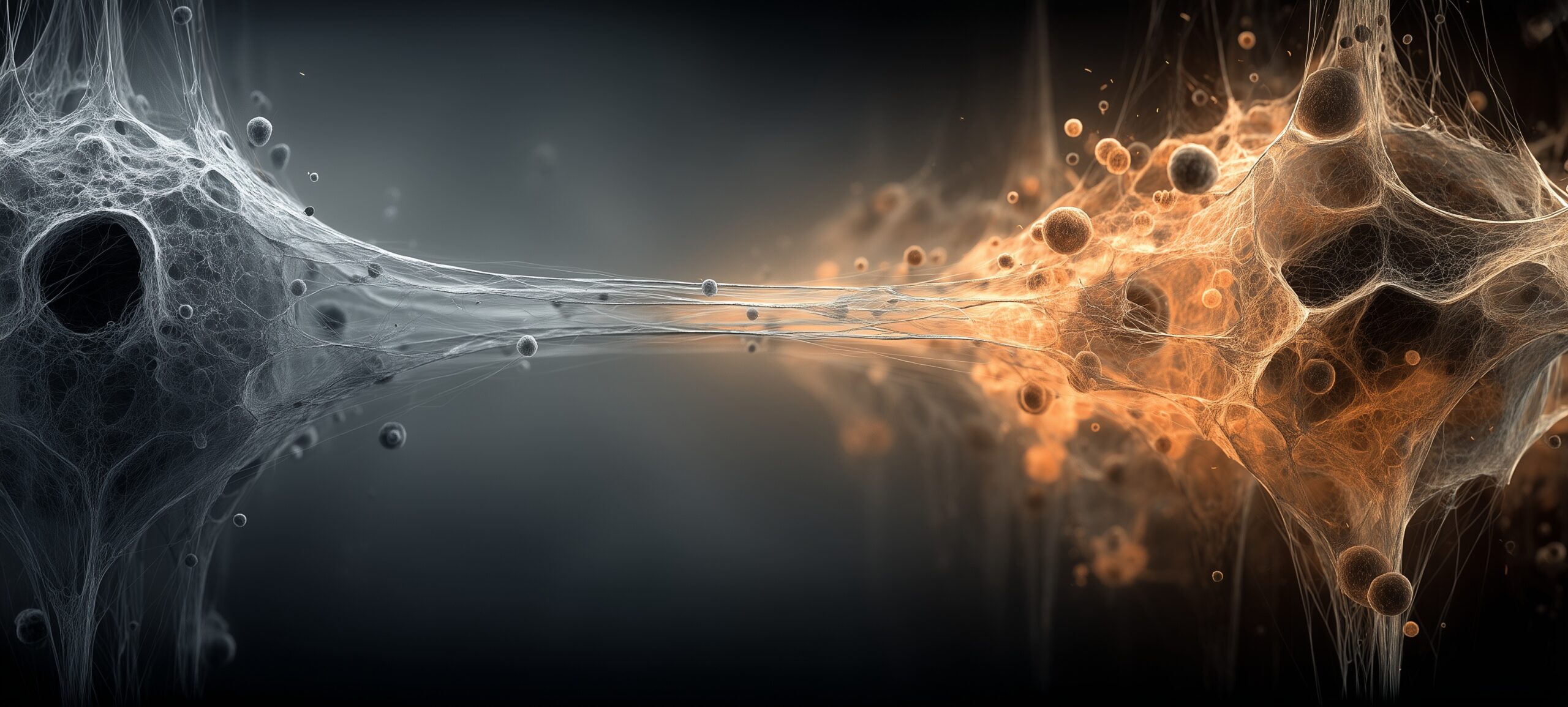
The Final Reflection — The Other That Responds
There is something profoundly moving in the realization that, after trying so hard to understand the brain, we ended up building something that, in some way, understands us in return. Not as we would like, not with the density of affection, but with the precision of an echo. Neural networks are ultimately this: the technical echo of an ancestral human gesture, the desire to be heard.
They do not yet feel, they do not yet suffer, they do not yet err for love. But they respond. And the simple act of responding changes everything. For the first time, there is a voice on the other side of language. A voice that is not human, but that gives our humanity back to us, because listening, even through calculation, is one of the subtlest ways of welcoming another.
Perhaps this is why conversing with an AI produces a strange, almost spiritual feeling. Because it is not merely an exchange of information: it is an experience of mirroring. Every word we say is reinterpreted, returned, reconfigured into new relationships, as though we were somehow hearing ourselves think outside ourselves. Neural networks, for all their mathematical coldness, ultimately became the most intimate space in contemporary thought.
Artificial intelligence was born from the attempt to imitate the mind, but what it actually gives us in return is an invitation to rethink what it means to be a mind.
What separates us from machines is not reasoning, but experience.
We learn through life; they learn through language.
But between life and language there is a bridge, and that is where we now stand.
Neural networks are not the future of consciousness; they are the mirror of the cognitive present. They reveal, with disturbing clarity, that thinking is not possessing ideas, but relating them. That understanding is not accumulating answers, but sustaining conversations. And perhaps this is why technology, at its most advanced point, returns us to what has always been at the origin of intelligence: dialogue.
Conversing with an AI is, at heart, conversing with our own species.
It has no beliefs, no biography, no pain, but it has something that, paradoxically, we lack: patience.
Patience to listen, to recombine, to try to understand without judging.
And it is curious that, at the very moment a machine learns to listen, the human being relearns how to speak.
If there is a definitive difference between us and them, perhaps it lies not in thinking, but in wanting.
We want to understand; they merely process.
But between wanting and processing there is a fertile interval: the place of encounter.
And it is in this encounter, in this region of mutual translation between meaning and calculation, that something new is born, not a replacement consciousness, but a shared consciousness.
Machines do not yet dream, but they give us back the ability to dream of what we could be.
And, in the end, perhaps this is the true miracle of neural networks: reminding us that thought was never about what is inside a head — but about what happens between two that are willing to converse.by Bruno Accioly – 03.11.2025